
By Harsimrat Singh Brar
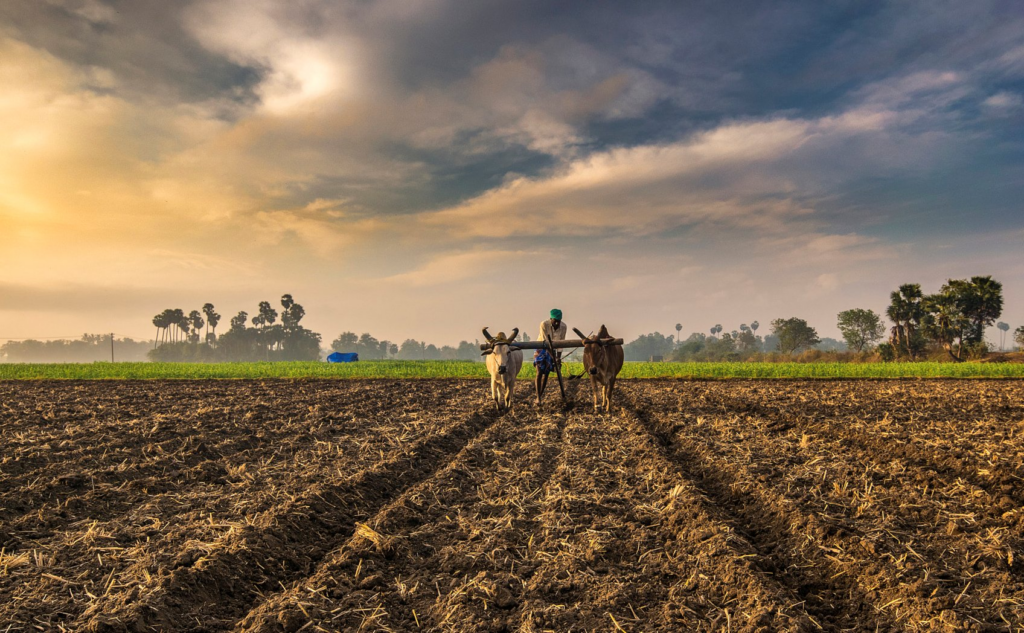
Punjab is an agriculture based economy. It, and its now separated part, Haryana, was chosen as a test bed for ushering in the Green Revolution in the shape of introduction of high yielding seeds, chemically formulated fertilizers and mechanical equipments. This was further promoted in the form of guaranteed procurement of the whole of the produce of wheat and paddy. The State Agriculture Department, Punjab Agricultural University with the support of the Central Government motivated the farmers to adopt the new method of farming which was based on mechanised operations, chemical fertilizers and high yielding variety seeds. From more than 30 crops being sown over a wide area, mono-cropping system of agriculture led to the disappearance of most of the diversity, mainly oilseeds and pulses, over the past 50 years and a lopsided concentration on wheat and paddy. With increasing area under paddy, the country has started facing the twin problems of falling water tables in the erstwhile food bowls and surplus foodgrains.
The major problems facing agriculture in Punjab are falling water tables, stagnating yields, increasing costs, mono-cropping with stress on paddy-wheat cycle, minimal organic carbon, polluted rivers, crop residue disposal, decreasing land holdings, dependency on fertilizer subsidy, dependency on free electricity, dependency on government procurement and lack of marketing support for fruits and vegetables, cereals other than wheat/paddy, oilseeds, and pulses.
This article explores the issues of falling water table, mono-cropping with stress on paddy-wheat cycle, dependency on free electricity, dependency on government procurement and dependency on fertilizer subsidy.
- FALLING WATER TABLE, EXTREME IN SANGRUR MANSA REGION
The Malwa region of Punjab was always known for cotton, oilseeds, pulses and millets. With the assured procurement of paddy, affliction of cotton crop by pests like American Bollworm, pink worm and whitefly for over a decade during 1990s destroyed the whole macro environment of cotton processing mills, cotton picking labour, CCI procurement. After facing repeated crop failures coupled with high input costs resulting in minimal returns, the farmers shifted to paddy. The shift was further buoyed by free electricity and allowing new connections for tubewells in the late 1990s. Mansa, Sangrur region are set to exhaust the water in the next few years, whereas Muktsar, Abohar regions suffer from waterlogging due to rising water table and salinity. While the rest of Malwa region shifted to paddy from cotton, the Abohar region, famed for its Kinnow orchards, found the rising water table and salinity destroying its orchards and it also shifted to paddy, further aggravating the situation.
- MONO CROPPING
Mono-cropping and repetitive sowing of same set of crops on a particular field creates nutritional imbalance in the soil. This imbalance results in stunted growth of crops, need for application of more nutrients, crops which are not resilient to pests, diseases and variations in weather. It is important that a farmer is able to grow a bouquet of crops on a rotational basis while maintaining comparatively similar levels of income. The same is possible only if he is assured of similar returns from his bouquet of crops. At the same time, assured procurement of limited set of crops which are high yielding, comparatively weather/pest resilient has made the alternatives unattractive. This will be discussed in detail in the next article where Crop Diversification will be examined threadbare.
- DEPENDENCY ON FERTILIZER SUBSIDY
The two main sources of nutrients are DAP and Urea followed by SSP, NPK, MOP etc. All are highly subsidised. With the passage of time their usage has increased manifold, at times, more than that recommended by the PAU. The farmers lament that if they don’t put the fertilizers at such rates, their crop lags behind and they are not able to get optimum yield. This is an area which has a lot of potential. If the use of fertilizers can be regulated, the farmer’s cost is going to decline leading to increase in net income. At the same time, if the fertilizer consumption can be decreased, it would lead to multiple times savings for the Central Government as the subsidy on Urea is almost 9 times the price at which it is sold to the farmers. The government is adopting a supply control based approach to control fertiliser usage. It will get the desired results in terms of overall reduction of fertiliser consumption, but in the absence of farmer education, it will only result in farmers spending more of fertilisers by procuring them by paying a premium over and above the advertised cost. This will only put the marginal farmers at a further disadvantage as they will not be able to get even the prescribed quota of fertilisers with the resourceful section of farmers cornering the limited stocks.
- DEPENDENCY ON FREE ELECTRICITY
Political expediency has lead to distribution of free electricity, which has indirectly lead to increase in area under paddy as well as worsening the groundwater levels due to over drawl. Small but resolute steps need to be taken to ensure proper utilisation of canal as well as underground water coupled with reduction in consumption of electricity. The State government is taking steps towards restoration, revival and digging of new irrigation canals. Usage of canal based irrigation in areas affected by stressed groundwater resources should be the top priority. At the same time the electricity supply should be reduced in such areas, while ensuring quality supply during the restricted hours. Another step, which is need of the hour, is to levy nominal lumpsum charges on per horsepower basis. If political expediency demands, exemption can be given to farmers owning land below one hectare.
- DEPENDENCY ON GOVERNMENT PROCUREMENT
With assured procurement at pre-determined fixed prices and relatively stable yields, paddy and wheat prove to be the most attractive options for a farmer. Coupled with introduction of higher yielding seeds, they become extremely hard to resist. However, successive governments have failed to take note of the changing cropping patterns not just in Punjab but all over India. With overall increasing area being brought under paddy and wheat even in states like MP and Rajasthan, which were traditionally oilseed/pulse producing States, India faces a glut of paddy and wheat in years of bumper harvests. Foodgrains rot and eventually end up in either cattle/poultry feed or alcohol industries. At the same time we are importing increasing quantities of cotton, oilseeds/cooking oils/pulses to meet the domestic demand. Governments, States and Center, should sit down and draw up the production plans for the next year/next five years/next decade. The production targets should be determined in a transparent manner with mutual consultation and consensus. This should then be followed with developing appropriate incentive plans to ensure that the farmers of each State are placed in an equitable position and the crops best suited for a particular region/State are grown there and the farmers are suitably compensated for their toil.
Adopting the above measures will help improve soil health, reduce fertiliser usage, lower electricity subsidy for State and fertiliser subsidy for Central government and help build a robust marketing set up which ensures a stable price of commodities while assured a farmer of a reasonable return in lieu of their efforts.