
Jasmeet Kaur
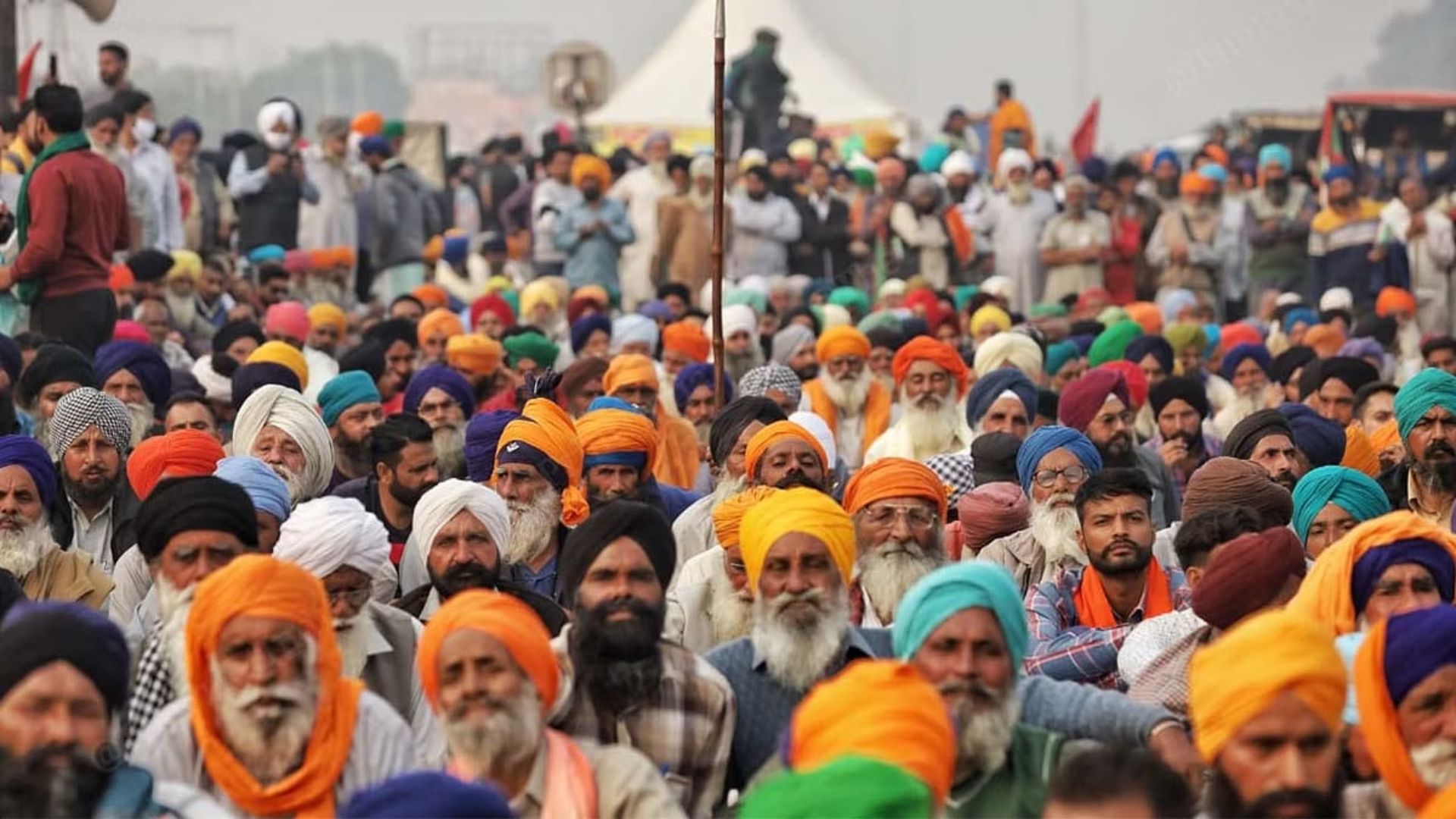
Punjab’s fertile plains — once the pride of India’s Green Revolution — farmers now find themselves reaping a different kind of harvest: debt. Loan waivers announced by the government frequently mark the headlines of the newspapers. But in reality, these waivers provide temporary relief to farmers but don’t act as a permanent solution to the problem of debt trap in the state. A recent report presented in the Lok Sabha indicated that farmers from Punjab have the highest outstanding loans among all northern states, amounting to Rs 1,04,064 crore, followed by Haryana.
Punjab’s agrarian economy is under severe strain. Data from the Ministry of Statistics and Programme Implementation shows that more than half of Punjab’s farm households are indebted, compared to the national average of 35%. The average outstanding loan per farmer household in Punjab is the highest among the northern states, amounting to ₹2,03,249 per agricultural household.
Agrarian distress is widespread in the state. Several studies (AERC, 2020) state that the rice-wheat rotation is causing a serious threat to the state’s natural resource base. Paddy in particular, a water-intensive crop is blamed for water-table depletion in the large areas of the state. The nutrient deficiency in the soil has led to the increased use of fertilizers and pesticides raising the cost of cultivation. However, crop prices have remained stagnant over the years posing a pressure on the farmers. Apart from this, farmers highly rely on informal lending in the state. About 35-40% of the loans in Punjab are funded by the informal moneylenders charging high interest rates from farmers. This has increased the debt burden on farmers creating a need for reforms.
Several loan schemes have been announced by the central and state governments over the past four decades. However, studies have highlighted key lacunae in debt waiver policies for farmers. Research indicates that while waivers temporarily erase debt, they do not address the underlying reasons why farmers borrow: high input costs, stagnant returns, and monsoon-dependent yields. Sriniwasan (2008) pointed out that “loan waiver scheme is an effort that cures symptoms rather than causes”. Such schemes can also undermine the credibility of formal lending systems, as banks become reluctant to extend fresh loans in anticipation of future waivers, pushing farmers back toward informal lenders. For instance, the Punjab government’s ‘Farm Debt Waiver Scheme’ (2017), which was intended to write off crop loans of marginal and small farmers, was later assessed (AERC, 2020; NABARD, 2021) as having limited reach, weakening repayment discipline, and failing to reduce long-term indebtedness.
Punjab is not alone. Several other states have rolled out multiple loan waiver schemes over the past decade such as the Maharashtra’s Mahatma Jyotirao Phule Shetkari Karja Mukti Yojana which aimed to waive outstanding crop loans up to ₹ 2 lakh per farmer and Farm Debt Waiver Scheme (Uttar Pradesh) which aimed to waive up to ₹ 1 lakh for small & marginal farmers. Studies by NABARD and the RBI have found that while these measures reduce debt distress in the short term, they also reduce the flow of credit and the willingness to repay in the long term. In some states, default rates spiked following waivers as borrowers began to expect future write-offs.
Studies by NABARD highlight that in Punjab, where dependence on the wheat–paddy cycle is already high, this cycle of “borrow-waive-repeat” is particularly damaging. New loans are often used to repay old ones rather than to invest in diversification or modernization. Without structural change, each waiver merely provides temporary relief rather than providing a long term solution.
The Agricultural Economics Research Centre (AERC) at Punjab Agricultural University has emphasized that meaningful debt reform must integrate credit, cropping patterns, and risk management i.e. combining financial reforms with agrarian reforms. To bring farmers out of the trap, the central and state governments need to focus more on the causes of the problem rather than mere financial help. Policies encouraging crop diversification must be taken into account as it spreads the risk and improves the incomes of the small and marginal farmers. Further, rural banks and cooperatives must expand and modernize institutional credit access deeper into villages, using digital tools and simplified processes to make credit easier and cheaper.
Punjab led India’s first agricultural revolution. It now has the opportunity — and the responsibility — to lead a second one: a credit revolution that provides a permanent solution to the problems farmers are facing nowadays. True debt relief will not come from writing off loans, but from rewriting the rules of rural finance. Only then can Punjab’s farmers progress and move out of the trap.
Jasmeet Kaur is an intern at PANJ Foundation.