By Sukhmanpreet Kaur
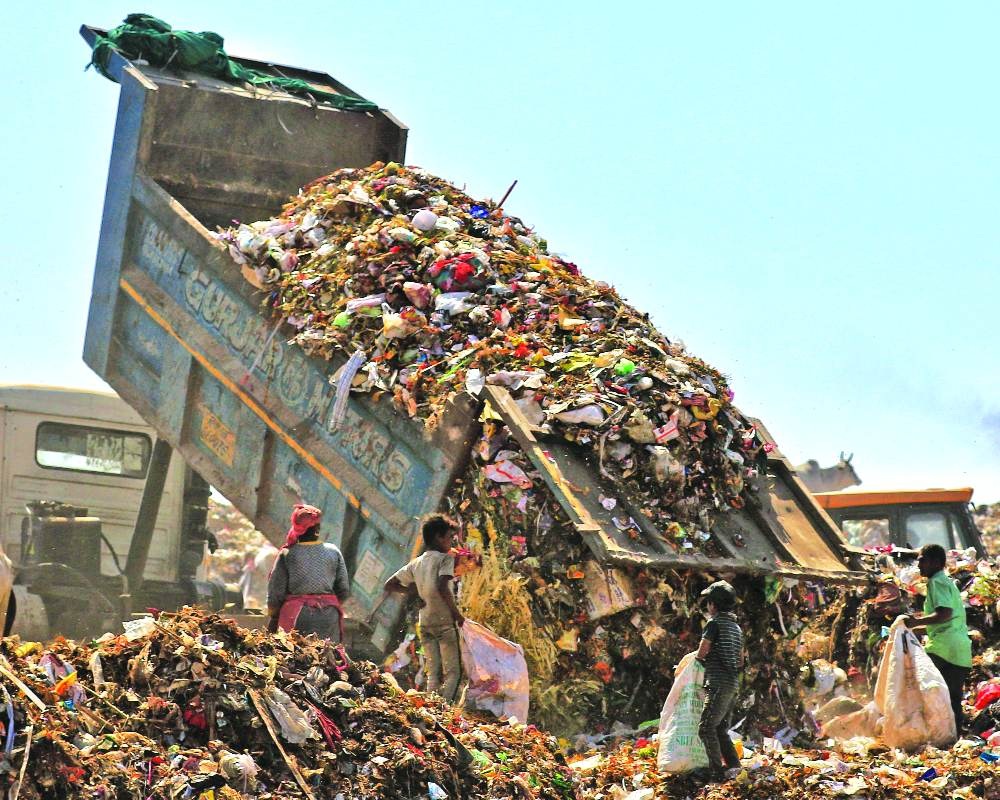
Punjab’s urban local bodies (ULBs) face a deepening paradox: solid waste systems that have grown in scale without growing in efficiency. While collection coverage has improved markedly over the past decade, the state continues to fall short on segregation, processing, and financial sustainability. The 2017–2022 Performance Audit of the Comptroller and Auditor General (CAG) of India laid bare these failures in concrete terms: in 2021–22, Punjab generated approximately 4,222 metric tonnes (MT) of solid waste per day, collected 4,207 MT, and treated just 1,471 MT — a processing rate of 35 per cent (CAG, 2026). Nearly two-thirds of collected waste was left untreated.
This article argues that Punjab’s waste governance remains trapped in incremental adjustments that do not address the structural roots of these failures. It proceeds in four parts: first, by situating Punjab’s challenge within India’s evolving regulatory framework; second, by identifying the specific gaps in law, policy, and practice that sustain underperformance; third, by analysing proposed reforms through the lens of feasibility and precedent; and fourth, by distilling a focused set of implementation-grounded recommendations. The argument draws on the CAG’s audit findings, recent interventions by the Supreme Court of India, and comparative evidence from Indian cities that have achieved meaningful progress.
The challenge of municipal solid waste management (SWM) in Indian cities is well-documented. Rapid urbanisation, rising per capita waste generation, and institutional undercapacity have together created a situation in which the volume of waste consistently outpaces the system’s ability to manage it. Punjab is not an outlier in this national picture — yet it is also not a passive victim of structural forces. The state has formal policies, dedicated funding channels, and an institutional apparatus for waste governance. The problem, as the evidence reviewed here suggests, is not the absence of policy but the failure of implementation.
From a theoretical standpoint, Punjab’s predicament closely mirrors what Charles Lindblom (1959) described as “muddling through” — a mode of policy-making that prioritises marginal adjustments over fundamental redesign. While incrementalism has a legitimate place in political systems where radical change is costly, it tends to entrench inefficiencies in domains that require structural reform. Solid waste governance, which depends on coordinated action across revenue collection, infrastructure investment, behavioural change, and inter-institutional coordination, is precisely such a domain.
This article takes its empirical footing from the CAG’s most recent Performance Audit Report on Solid Waste Management by Urban Local Bodies in Punjab (Report No. 5 of 2025, CAG), as well as state-level policy documents, national SWM rules, and judicial interventions. It also draws on comparative evidence from cities such as Indore, Pune, and Alappuzha, where targeted institutional reforms have produced measurable improvements.
The Regulatory Framework and Its Limits
India’s primary legislative instrument for urban solid waste is the Solid Waste Management Rules, 2016, notified by the Ministry of Environment, Forest and Climate Change (MoEFCC) under the Environment (Protection) Act, 1986. The 2016 Rules represented a significant advance over earlier regulations: they mandated source segregation into wet, dry, and hazardous streams; introduced obligations on bulk waste generators; formally recognised informal waste pickers as stakeholders; and tasked ULBs with drawing up action plans and reporting against service-level benchmarks.
In practice, however, the 2016 Rules suffered from well-documented structural weaknesses. Rule 4, which obligates waste generators to segregate waste at source, places the compliance burden on households and institutions but does not specify binding performance triggers for ULBs when collection infrastructure is inadequate. As analysts at Down to Earth observed, the enforcement architecture of the 2016 Rules “primarily activates at the level of waste generators, without equivalent performance-linked triggers to ensure that ULBs have the collection, transport, staffing, and processing capacity required to sustain segregation as a system-wide outcome” (Down to Earth, 2026). Segregation cannot be achieved solely through generator compliance if the municipal collection system picks up mixed waste regardless.
The SWM Rules, 2026, which supersede the 2016 framework with effect from April 1, 2026, attempt to close several of these gaps. They introduce four-stream mandatory segregation (wet, dry, sanitary, and special care waste); impose Extended Bulk Waste Generator Responsibility (EBWGR); establish a centralised digital portal for registration, audit reporting, and waste lifecycle tracking; and codify the polluter pays principle through Environmental Compensation (EC) for reporting violations and improper handling. For the first time, non-compliance is explicitly treated as penal rather than merely administrative.
The Supreme Court, in a February 2026 order arising from NGT proceedings against the Bhopal Municipal Corporation, reinforced this shift. The bench directed a three-tier enforcement mechanism: immediate fines for initial violations, criminal prosecution for continued non-compliance, and accountability extending to officials who fail to exercise their oversight duties (Supreme Court of India, February 2026). The Court also directed the constitution of multi-tier monitoring task forces at state, district, block, and ward levels before the new rules took effect.
Despite these improvements, significant structural challenges remain. The 2026 Rules do not articulate dedicated funding pathways, leaving smaller ULBs — the majority in Punjab —dependent on Swachh Bharat Mission (SBM) and state transfers that have historically been underutilised. The institutional capacity required to operationalise digital monitoring and environmental compensation mechanisms is also uneven across ULBs. These gaps are consequential for Punjab, where most waste generation and processing failures are concentrated in small and medium municipalities rather than in larger corporations.
Key Challenges: Evidence and Analysis
The Enforcement Deficit
Punjab’s urban local bodies (ULBs) have established waste management bylaws; however, a CAG audit reveals inconsistencies in the drafting and implementation of these ordinances. ULBs display a tendency for high self-assessed compliance with Service Level Benchmarks (SLBs), yet third-party audits indicate a significantly poorer reality. For example, in a 2025 audit in Uttar Pradesh, the CAG noted that SLB claims by sampled ULBs lacked supporting documentation, highlighting the unreliability of self-reporting as a measure of actual performance. In Punjab, the state’s solid waste management (SWM) policy was only notified in July 2018, past a deadline outlined in 2016 Rules, with action plans not prepared until between August 2018 and December 2019 (CAG, Report No. 5 of 2025) . This delay hindered the timely establishment of necessary infrastructure and led to premature enforcement of segregation norms, undermining public confidence in the system. Additionally, there is a significant lack of third-party compliance monitoring; although the Punjab Pollution Control Board (PPCB) is supposed to oversee enforcement under the SWM Rules, audits indicate limited inspections and ineffective penalty mechanisms. This lack of independent oversight results in enforcement being sporadic rather than a reliable system of accountability.
Fragmented and Underutilised Financial Management
Financial underutilisation is a critical issue highlighted by the CAG audit, revealing that out of ₹1,011.33 crore allocated for Solid Waste Management (SWM) in Punjab’s Urban Local Bodies (ULBs) from 2017 to 2022, only ₹692.32 crore (68%) was spent. Alarmingly, among 20 sampled ULBs, only 49% of available funds were utilized. The underutilisation, attributed to infrastructure delays, led to insufficient development of material recovery facilities, composting pits, and sanitary landfills(CAG,2026). This problem stems from poor fund management rather than scarcity, as funds were managed through the Punjab Infrastructure Development Board and Punjab Mandi Infrastructure Development Corporation, with opaque utilization tracking. Most ULBs lacked internal audit departments, mirroring national trends. Additionally, revenue from SWM services is minimal, with only ₹3.70 crore generated across 166 ULBs, indicating a lack of enforced user fee mechanisms and reliance on delayed central and state transfers.
Persistent Segregation Failure
Segregation at source is a significant challenge in Punjab’s waste management, with 4,222 MT of solid waste generated daily in 2021-22, but only 1,471 MT (35%) treated(CAG,2026). The remaining waste accumulates at dumpsites or remains unprocessed. An audit showed underperformance among sampled municipalities, highlighting systemic issues in waste segregation including irregular collection, lack of standardized dual-bin infrastructure, and insufficient economic incentives. Inconsistent door-to-door collection further discourages households from segregating waste. A 2026 analysis noted that urban local bodies (ULBs) lack performance incentives for providing necessary collection infrastructure. The Supreme Court’s mandate for ULBs to acquire compartmentalized vehicles is critical, as without proper infrastructure, new segregation rules may not succeed, just as previous efforts in 2016 had faltered.
Underperforming Infrastructure and PPP Frameworks
Punjab’s investments in processing infrastructure have not resulted in increased processing capacity, as highlighted by a CAG audit that identified operational and contractual failures in several public-private partnership (PPP) projects. Common issues involve PPP contracts lacking adequate performance milestones, distributing risk unfairly to private operators, and the absence of independent arbitration for disputes. Legacy dumpsites, a national issue, persist despite bio-remediation efforts, with Punjab facing a significant waste crisis, having only managed 40.78 lakh metric tonnes of the 84.09 lakh metric tonnes of accumulated legacy waste as of late 2025. A substantial increase in capital investment and effective PPP arrangements are essential to resolve the remaining waste by April 2027, but current constraints hinder progress (Punjab Local Government Department, 2025).
Policy Analysis: What Reform Requires?
Enforcement as a Service-Delivery Obligation
The focus of waste governance enforcement has traditionally been on penalties for waste generators; however, the critical reform lies in enforcing Urban Local Body (ULB) service-delivery obligations under the 2026 Solid Waste Management (SWM) Rules. These rules mandate ULBs to provide door-to-door collection of segregated waste and to ensure processing capacity. The Supreme Court’s order in February 2026 enforces these obligations through infrastructure audits and the establishment of Material Recovery Facilities (MRFs) as prerequisites for compliance. In Punjab, proper enforcement against waste generators can only occur once a reliable service environment is established. Currently, bylaws penalizing non-segregation lack legitimacy due to insufficient support from collection infrastructure. A proposed two-phase model would first focus on establishing service delivery targets for ULBs, followed by enforcement of generator obligations once services are operational. This approach necessitates measurable service delivery indicators to be publicly reported and independently audited, which the Punjab Pollution Control Board (PPCB) is empowered to conduct but has not consistently pursued.
Financial Accountability through Real-Time Monitoring
The gap between fund allocation and utilization in ULBs is significant, as shown by a 49% shortfall in a CAG audit. To address this, a state-level digital dashboard for tracking SWM fund allocation and expenditures in real time is essential, along with mandatory quarterly reporting at the ULB level. Punjab’s 2026 SWM Rules support a centralized online portal for waste lifecycle tracking, and the state should enhance this with fiscal transparency. Kerala has successfully implemented ward-level expenditure tracking, which could inform a similar mechanism in Punjab linked to existing fund release procedures. Additionally, regular independent audits and online publication of expenditure data would enhance accountability for ULBs.
Segregation Infrastructure as a Prerequisite, Not a Reward
The SWM Rules of 2016 and 2026 require segregation at the source without providing guidance on financing collection infrastructure in ULBs with limited revenues, resulting in unsupported legal mandates. A reform pathway involves conducting segregation-readiness audits for each ULB, evaluating aspects like vehicle compartmentalization and collection frequency, before implementing penalties for non-compliance. This approach aligns with the Supreme Court’s 2026 directive emphasizing the need for infrastructure development. Additionally, user fees tied to verified segregation behavior can help, but these should only be considered once collection reliability is assured, as local evidence suggests that fee reforms are better accepted when accompanied by visible service improvements.
Redesigning PPP Contracts for Accountability
The operational failures in Punjab’s PPP-based processing infrastructure reflect design problems rather than market failures. Effective PPP contracts in SWM share common features that are absent from many Indian municipal arrangements: clearly defined performance milestones with payment contingency, independent technical oversight during operations, transparent dispute resolution procedures, and provisions for early renegotiation when performance trajectories diverge from targets.
Punjab’s Department of Local Government should establish a standardised PPP contract template for waste processing concessions, drawing on model contracts developed by MoHUA for SBM Urban 2.0. Contracts should incorporate graduated performance deductions (rather than binary forfeitures) for processing shortfalls, and include step-in rights for the state in the event of prolonged non-performance. Independent technical auditors, appointed by PPCB rather than the contracting ULB, should monitor operational performance against contracted metrics quarterly.
Recommendations
Recommendation 1: Establish a Phased Service-Before-Compliance Enforcement Framework
Punjab should adopt a two-phase approach to solid waste management (SWM) enforcement. The first phase involves enforcing generator commitments, evaluated based on infrastructure thresholds for urban local bodies (ULBs), including operational material recovery facilities (MRFs) or composting units, specialized vehicles for waste separation, and comprehensive door-to-door collection. Enforcement of generator-side segregation will only occur when ULBs meet these criteria. The Punjab Pollution Control Board (PPCB) shall conduct annual inspections of ULBs, publicly sharing the results. Additionally, elected ward council members should be incorporated into compliance monitoring, drawing on models like Maharashtra’s waste management committees that link elected officials to operational oversight.
Recommendation 2: Create a State SWM Financial Dashboard with Quarterly Audits
The Department of Local Government should establish a real-time digital dashboard to track the allocation, spending, and processing efficiency of SWM funds across 166 ULBs. This dashboard must provide disaggregated data on fund sources, expenditure categories, and progress towards infrastructure targets, with updates quarterly available to the public. ULBs with fund utilization below 60% in a quarter must undergo independent audits. The implementation of the 2026 SWM Rules supports central digital registration and audit reporting, enhancing accountability through a fiscal dashboard at the state level connected to a national portal.
Recommendation 3: Scale Decentralised Processing with District-Level Targets
Large centralized processing facilities present risks of failure, high capital investment, and transportation costs. Punjab should prioritize composting and Materials Recovery Facility (MRF) infrastructure at ward and cluster levels for smaller urban local bodies, reserving large facilities for major municipalities such as Amritsar and Ludhiana. Decentralized methods have proven effective, as seen in Alappuzha, Kerala, which eliminated its landfill by establishing biogas plants and composting units. Indore, recognized as India’s cleanest city, processes over 1,200 MT of waste daily through decentralized composting and waste-to-energy facilities reliant on effective source segregation. Punjab’s State Solid Waste Management Policy should set district-level goals for ward composting, coupled with a financial dashboard for progress monitoring.
Recommendation 4: Integrate Informal Waste Workers through a Punjab Waste Worker Cooperative Framework
The informal garbage pickers play a crucial role in material recovery outside Punjab’s municipal solid waste management (SWM) system; however, their contributions are not formally recognized. While the 2016 and 2026 SWM Rules emphasize the inclusion of waste pickers, implementation within Punjab’s urban local bodies (ULBs) has been lacking. The SWaCH(Solid Waste Collection and Handling) cooperative in Pune exemplifies a successful integration model, having included over 3,500 informal waste workers, achieving an 80–85% recycling rate, and preventing 60 metric tons of waste from reaching landfills daily, leading to significant GHG emission reductions(Centre for Public Impact,2024). The model’s financial sustainability derives from user fees collected directly from households, minimizing dependency on municipal budgets. For Punjab to adopt a similar framework, the Department of Local Government should conduct a waste picker census, support cooperative registrations, revise ULB service contracts for cooperative involvement, and link cooperatives with extended producer responsibility programs for additional revenue. The SAMCLAF model from Ambikapur offers further insights by highlighting gender-inclusive employment through the engagement of women’s self-help groups.
Punjab’s solid waste management issue is fundamentally a governance problem, with extensive funds, policies, and institutional frameworks failing to establish accountability. Around two-thirds of waste remains untreated, and significant funds are unspent, while legal mandates for waste segregation lack supportive infrastructure. Proposed reforms include phased enforcement linked to service delivery, real time fiscal transparency, decentralized processing with district targets, and integrating waste workers into cooperative frameworks, drawing inspiration from successful implementations in other Indian cities. The effectiveness of these reforms depends on political will and institutional capacity at key governmental departments. The upcoming SWM Rules, 2026, and Supreme Court directions offer an opportunity for genuine reform, but uncertainty remains whether Punjab will leverage this regulatory framework or continue incremental approaches that hinder progress in governance.
References
- Comptroller and Auditor General of India. (2026). Performance Audit Report on Solid Waste Management by Urban Local Bodies in Punjab, Report No. 5 of 2025. Government of India.
- Comptroller and Auditor General of India. (2025). Performance Audit Report on Solid Waste Management by Urban Local Bodies in Uttar Pradesh, Report No. 1 of 2025. Government of India.
- Centre for Public Impact. (2024). Waste Management Cooperative: Pune, India. Retrieved from https://centreforpublicimpact.org
- Down to Earth. (2026, January 29). India’s new Solid Waste Management Rules promise greater discipline, while navigating familiar fault lines. Retrieved from https://www.downtoearth.org.in
- Down to Earth. (2025, April 3). Informal waste pickers are neglected, yet indispensable. Retrieved from https://www.downtoearth.org.in
- Government of India. (2016). Solid Waste Management Rules, 2016. Ministry of Environment, Forest and Climate Change.
- Government of India. (2026). Solid Waste Management Rules, 2026. Ministry of Environment, Forest and Climate Change.
- Lindblom, C. E. (1959). The science of muddling through. Public Administration Review, 19(2), 79–88.
- Punjab Local Government Department. (2025, December). Performance of ULBs in Solid Waste Management, 2025. Government of Punjab.
- Supreme Court of India. (2026, February 19). Bhopal Municipal Corporation v. Dr. Subhash C. Pandey, Civil Appeal No. 6174/2023. Order on Solid Waste Management Rules, 2026.
- World Bank. (2018). What a Waste 2.0: A Global Snapshot of Solid Waste Management to 2050. World Bank Group.